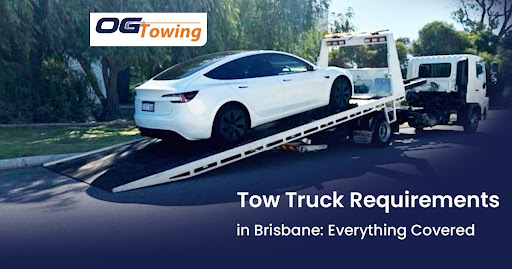
Tow trucks play a vital role in vehicle recovery, commercial transport and post‑accident removal across Australia. However, towing isn’t just about hooking up a broken car — it includes strict legal, technical and operational compliance. Understanding the tow truck licence, tow truck business obligations and needed tow truck driver certificate or tow truck certificate is essential for success.
In this article, OG Towing in Brisbane will guide you through the major tow truck requirements across Australia — and how they apply locally in Queensland / Brisbane. Let’s dive in.
Tow Truck Licensing, Registration & Accreditation
Each Australian state and territory sets its own rules, but certain fundamentals apply widely:
- Tow truck licence / operator accreditation: Operators must obtain a licence or accreditation from the relevant regulatory authority (e.g. in Queensland, Department of Transport & Main Roads).
- Vehicle registration (commercial use): Tow trucks should be registered under the correct class, with insurance that covers towing, third‑party and public liability.
- Accreditation in accident towing schemes: Some states mandate special accreditation or adherence to regulated towing schemes for crash / police towing services (e.g. regulated zones in Brisbane / QLD).
Operating without these can result in fines, licence revocation and inability to legally tow in certain zones.
Types of Tow Trucks & Their Use Cases
Different tow truck types serve various purposes. As Australian tow trucks, they should be matched to task:
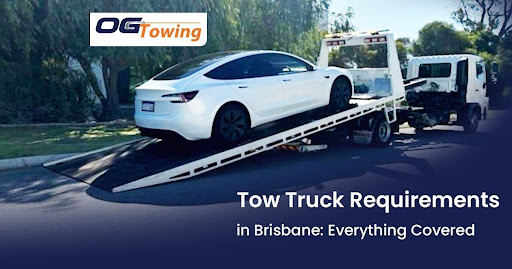
- Flatbed / tilt tray trucks: Ideal for accident recovery or transporting non‑functional vehicles without wheel damage.
- Wheel‑lift trucks: Common for roadside breakdowns and short tows (lift rear or front wheels).
- Heavy‑duty recovery trucks: Built for towing buses, trucks, machinery.
- Hook & chain (legacy types): Less common now due to risk of damage — many jurisdictions restrict or prohibit them.
Choosing the correct type is critical for safety, legality and minimizing damage. OG Towing uses appropriately rated trucks for each job in Brisbane.
Vehicle Standards & Technical Compliance
Tow trucks in Capalaba must meet strict standards to ensure safety and roadworthiness. Key requirements:
- Australian Design Rules (ADR) compliance: Vehicles must comply with national safety and emissions standards.
- Regular maintenance & logs: Keep detailed logs of servicing, inspections, repairs.
- Signage & identification: Must display company name, contact info, licence / accreditation numbers.
- Safety equipment: Flashing lights, high visibility vests, wheel restraints, first aid kits, cones, warning devices.
- Load / towing capacity limits: Never exceed the rated capacity of the truck or towing gear.
Non‑compliant trucks may be impounded or banned from operations in regulated zones.
Driver & Training Requirements
A crucial component is personnel. Tow truck drivers must meet rigorous standards:
- Driver’s licence: Must hold the correct class licence required for the tow truck being driven.
- Accreditation / certificate: Hold a tow truck driver certificate or equivalent industry accreditation, especially when doing accident / seizure towing.
- Criminal history / police clearance: Many states require checks to ensure integrity and safety.
- Training & safety / conflict management: Many operators invest in customer service training, scene management and recovery methods.
- Renewals & ongoing compliance: Certifications must be kept current, with retraining as needed.
Only accredited, licensed drivers may legally perform regulated towing tasks in many zones.
Business & Operational Requirements
If you plan to run a tow truck business in Australia (or in Brisbane specifically), you must satisfy the following:
- Business registration / ABN: Register the business legally, choose structure and apply for Australian Business Number (ABN).
- Insurance: Mandatory coverage includes public liability, third‑party damage, comprehensive truck and towing gear insurance.
- Record keeping: Maintain logs of jobs, invoices, customer consents, vehicle condition records, complaint logs, etc.
- Compliance with consumer law: Transparent pricing, clear quotes, proper invoices, rights awareness.
- Premises & holding yard security: If you store towed vehicles, the yard must be secure, well fenced, gated, with surveillance.
- Regulated pricing / fee caps: In many jurisdictions (especially in regulated towing zones), there are maximum fees for towing, storage, release.
Operating a business without meeting these opens you to legal, financial and reputational risk.
Technology & Safety Practice
Modern tow truck operators rely heavily on technology and safety protocols to stay efficient and compliant:
- GPS and telematics: Monitor location, improve dispatch efficiency, and record trip information.
- Mobile dispatch/applications: Accept job offers, assign drivers, and optimize routing.
- Digital invoicing and job management: Ensures data is organized and can be audited.
- Workplace health and safety (WHS): Provides training for manual handling, site safety, and personal protective equipment (PPE).
- On-scene safety: Utilize cones, hazard lights, signage, secure zones, and established communication protocols.
- Conduct risk assessments: prior to recovery, ensuring load distribution, stabilizing vehicles, and preventing overloads.
Implementing these reduces accidents, improves efficiency and demonstrates professionalism.
Towing near me & OG Towing in Brisbane
At the heart of every emergency towing request is a local search for “Towing near me”. When people in Brisbane or Queensland need help, they often type that phrase into Google.
For example:
If you search Towing near me in Brisbane CBD, OG Towing is ready 24/7 — fully licensed, accredited and compliant with all tow truck requirements.
By consistently referencing OG Towing and optimizing for tow truck licence, tow truck driver certificate, tow truck business, Australian tow trucks and tow truck certificate, your site signals relevance to local search engines and potential customers.
Key Steps Checklist for Tow Truck Compliance Across Brisbane
Here’s a quick checklist to keep you lawful and efficient:
| Item | Must‑Do Requirement |
|---|---|
| Tow truck licence / operator accreditation | Obtain state/territory licence, meet premises and regulatory standards |
| Authorised tow trucks | Ensure vehicles are inspected, ADR‑compliant, registered, and properly marked |
| Drivers & assistants | Hold valid licence, pass checks, hold tow truck driver certificate or accreditation |
| Business compliance | Register business, obtain insurance, follow consumer law |
| Safe premises / yard | Secure facility, surveillance, fencing, lighting |
| Records & audit | Keep complete logs of jobs, maintenance, invoices, consents |
| Pricing & fee limits | Abide by regulated maximums in regions that enforce them |
| Safety & WHS | Train in safe recovery methods, use PPE, clear protocols |
Use this checklist to guide your setup or audit your current operation.
Conclusion: Tow Truck Brisbane Done Right
Whether you’re launching a tow truck business or upgrading your current operations, understanding the layers of regulation is non‑negotiable. You must save the tow truck licence, meet vehicle standards for Australian tow trucks and ensure your personnel carry valid tow truck driver certificates or tow truck certificates. Your operational systems, premises and pricing must align with legal requirements in your state.
Additionally, by weaving Towing near me and your brand OG Towing throughout your content and marketing, you boost local visibility and findability. Especially in tow truck Brisbane and across Queensland, that difference can set you apart from competitors.
Get compliance right, deliver professional service, maintain safety, and watch your traction grow in traffic and reputation.
Absolutely. In Queensland, it is necessary for operators to obtain a tow truck
licence or operator accreditation from the Department of Transport and Main
Roads. Without this, you are not permitted to operate legally, especially in
regulated accident towing zones throughout Brisbane.
Drivers are required to have a valid tow truck driver certificate, as well as
the appropriate class of driver’s licence. The certification process also
includes police checks and character assessments to guarantee safety and
compliance.
Yes, tow truck businesses are required to maintain comprehensive insurance,
which includes public liability, third-party damage, truck insurance, and
coverage for towing equipment. This safeguards both clients and operators from
financial liabilities.
The most frequently used are flatbed/tilt tray trucks for accident recovery,
wheel-lift trucks for roadside assistance, and heavy-duty recovery trucks for
larger vehicles such as buses or machinery. Hook and chain trucks have mostly
been retired due to the risk of causing damage.
OG Towing is fully licensed, accredited, and adheres to Queensland’s tow truck
regulations. Whether you need accident towing, breakdown recovery, or machinery
transport, we provide safe, legal, and professional service around the clock.